Last updated October 15, 2026
Seasonal ADU Care for Woodland Hills: Year-Round Homeowner’s Guide
Woodland Hills recorded temperatures above 110°F multiple times in the last three years. That kind of heat does more than run up your electric bill. Thermal expansion from those spikes is the primary driver of caulk failure, panel joint separation, and mini-split refrigerant pressure drops on ADUs built without Valley-climate specs in mind. This guide gives you a season-by-season maintenance plan that matches how Woodland Hills actually behaves: a long, brutal summer, a short wet winter, and two brief shoulder seasons where the real repair work gets done. For related planning, see our ADU Cost Breakdown: The Woodland Hills Homeowner’s Reference for 2026. You’ll learn what to check, when to check it, and what you can safely handle yourself versus what needs a licensed pro.
Quick Answer
Seasonal ADU care in Woodland Hills comes down to two critical windows: prep the structure every spring before the 100°F-plus days hit, and seal every gap every fall before the winter rains arrive. Most ADU damage in this area is slow and cumulative – failed caulk, clogged drainage, drifting refrigerant levels – rather than sudden. A two-hour seasonal inspection twice a year catches nearly all of it before it becomes a four-figure repair.
Table of Contents
- Spring Reset: The Post-Rain Inspection
- Pre-Summer Checklist: Beating the Valley Heat
- Fire Season Prep: WUI Zone Rules for ADUs
- Monsoon Season and Peak Heat: Mid-Summer Watch Items
- Winter Rain Prep: What Two Inches of LA Rain Can Do
- The Two-Year Rolling Maintenance Log
- Common Mistakes to Avoid
- When to Call a Professional
Spring Reset: The Post-Rain Inspection
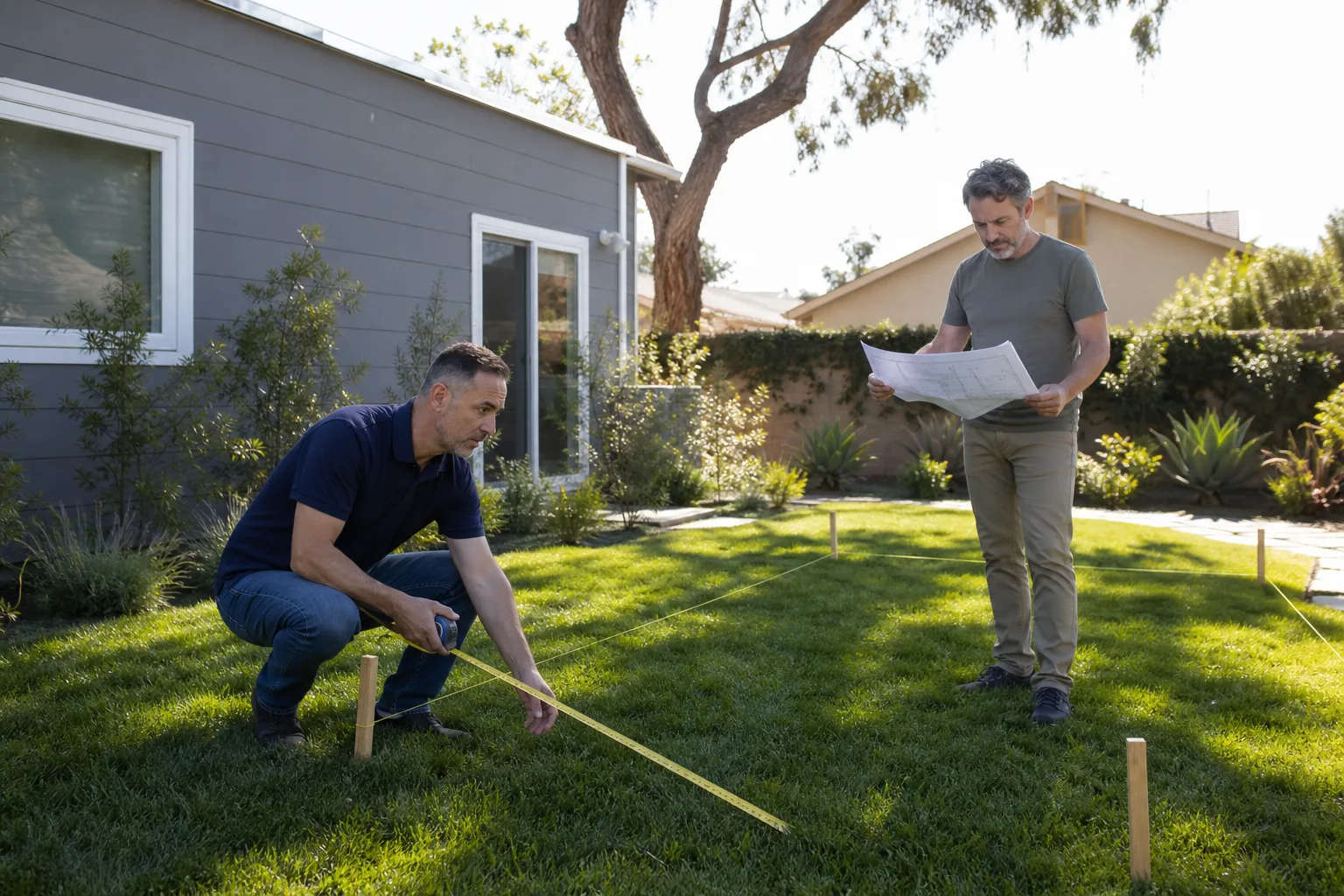
By March, Woodland Hills has usually dried out from whatever winter delivered. That’s the moment to walk the perimeter of your ADU and look for what the rain exposed. Here’s our recommended order of operations, based on what we see on ADUs across the Valley.
Step 1: Check drainage first. Walk the exterior after a dry spell and look for water stains on the foundation stem wall, mud splatter patterns that rise higher than your foundation’s weep screed, or soil that has eroded away from the slab edge. Any of those means water is not flowing away from the structure the way it should. In Woodland Hills, where most ADU pads are cut into a slope, a clogged area drain or a downspout discharging against the foundation is the usual culprit.
Step 2: Inspect wood-adjacent soil. If your ADU has any wood siding, trim, or a wood-framed deck, pull back mulch or ground cover and look for soil resting directly against the wood. Wood-adjacent soil holds moisture against the material and invites termites and dry rot. You want at least six inches of clearance between soil and any wood element.
Step 3: Swap the HVAC filter. After a wet winter, your mini-split’s filter has been pulling damp air for months. A clogged filter makes the system work harder during the first heat wave, which drives up energy costs and shortens compressor life. Swap it at the spring reset and again in late summer. If you don’t know your filter’s MERV rating or size, check the side of the existing filter before you order a replacement.
Step 4: Test every window and door seal. Run a hand along the weatherstripping on every operable window and door. If it feels brittle, flattened, or pulls away from the frame, replace it. These seals dry out fast in Southern California heat, and the gaps they leave are exactly where cool air escapes in July.
We’ve seen more ADU damage trace back to skipped spring inspections than any other single cause. It’s unglamorous work. It’s also where the money gets saved.
Pre-Summer Checklist: Beating the Valley Heat
Woodland Hills routinely posts some of the highest summer temperatures in Los Angeles County. For an ADU, that heat is a stress test every single day. This pre-summer checklist is designed for completion by late April or early May, before the first sustained heat wave.
- Inspect and re-caulk every exterior joint. Expansion and contraction from daily temperature swings cause caulk to crack and pull away from surfaces. Pay special attention to window perimeters, door frames, corner boards, and any seam where different materials meet – like where a prefab panel meets a site-built wall. If the caulk looks cracked, recessed, or chalky, cut it out and re-apply with an exterior-grade, paint-ready sealant rated for high-UV exposure.
- Check mini-split refrigerant levels. If your ADU uses a ductless mini-split, have the refrigerant charge checked before summer demand peaks. Low refrigerant forces the compressor to run longer and hotter, which shortens its life and inflates your electric bill. This is not a DIY check – refrigerant work requires an EPA-certified technician.
- Inspect the roof membrane or roof surface. On flat or low-slope ADU roofs common with prefab designs, look for bubbles, cracks, or areas where the membrane has pulled away from flashing. On pitched roofs, check for cracked or displaced shingles or tiles. Damage that looks small in May becomes a leak source during the first monsoon downpour.
- Clean the condenser unit. The outdoor condenser unit for your mini-split or HVAC system collects dust, leaves, and pollen all spring. Clear debris from around the unit, gently rinse the fins with a garden hose (never a pressure washer), and make sure there’s at least two feet of clear space on all sides for airflow.
- Check window glazing and solar orientation. If your ADU has windows that take direct afternoon sun, consider whether existing shade is adequate. Thermal gain through unshaded glass is the fastest way to make a small space uncomfortably hot. Exterior shade screens or an awning can reduce interior temperatures by 10 to 15 degrees on a 100-degree day.
One fact most homeowners don’t think about: caulk is a wear item, not a permanent installation. In Woodland Hills, we’ve seen caulk installed just two years prior fail completely due to UV exposure and thermal cycling. If your ADU is more than three years old, schedule this inspection every spring without exception.
Fire Season Prep: WUI Zone Rules for ADUs
Most of Woodland Hills sits within a designated Wildland-Urban Interface (WUI) zone, which means CAL FIRE and the Los Angeles County Fire Department apply additional building and maintenance standards to structures, including ADUs. See ADU Permits, Codes & Inspections in CA: What You Need to Know for the regulatory foundation. Fire season in this area now runs effectively year-round, but the critical window is May through November.
Defensible space. Maintain a 5-foot ember-resistant zone around your ADU. Remove dead plants, dried leaves, pine needles, and any combustible material from this space. Replace bark mulch with gravel, decomposed granite, or pavers within five feet of the structure. Move firewood, lumber, and propane tanks at least 30 feet from the ADU.
Ember-resistant venting. The most common way fire enters a home is through vents. If your ADU has foundation, eave, or attic vents, verify they are covered with 1/8-inch to 1/16-inch noncombustible metal mesh. If yours are screened with plastic or larger mesh, replace them. Several newer ADU designs built by manufacturers like Abodu and Cover come with WUI-compliant venting from the factory, but those vents still need to be cleaned of lint, dust, and debris each fall.
Exterior materials. If you’re planning a new ADU or recladding an existing one in a WUI zone, fiber cement siding like James Hardie products carries a noncombustible rating that most other siding materials can’t match. For older ADUs with wood siding, check for gaps, cracks, or exposed wood that could ignite from ember contact and seal or repair them before fire season peaks.
Roof and gutter maintenance. A roof covered in dry leaves is a direct ember ignition risk. Clean gutters and roof valleys each fall, and check that your roof’s fire rating hasn’t been compromised by cracked tiles or exposed underlayment.
These requirements are not optional in Woodland Hills. The fire marshal can issue citations for noncompliant properties during red flag warnings, and your insurer may deny a claim if an inspection reveals neglected fire-prevention maintenance.
Monsoon Season and Peak Heat: Mid-Summer Watch Items
Summer thunderstorms in the San Fernando Valley are less frequent than in the desert, but when they arrive, they bring sudden, intense rainfall that catches drainage systems off guard. Combined with extreme heat, this is the season when small problems compound quickly.
Watch for thermal movement. During July and August, materials expand during the day and contract at night. You might notice new hairline cracks in stucco, gaps opening at trim joints, or doors that suddenly stick. Most minor thermal movement is cosmetic, but gaps wider than 1/8 inch around windows or doors warrant a professional look, especially if they appear suddenly.
Monitor mini-split performance. If your mini-split struggles to hold temperature below 78°F during peak afternoon heat, something is off. The usual suspects in order of likelihood: dirty filter, dirty condenser coil, low refrigerant. The first two are homeowner fixes. The third requires a service call.
Check for roof ponding after storms. Flat-roof ADUs should drain completely within 48 hours of a rain event. Standing water that persists longer than that indicates a drainage problem – a clogged scupper, a sagged roof deck, or improperly sloped insulation. Ponding water is the leading cause of premature roof membrane failure on flat roofs.
Keep an eye on your electricity load. An ADU with a mini-split running at full capacity, plus a refrigerator, plus whatever else is plugged in, can draw significant amperage. If your ADU’s breaker trips on the hottest days, don’t simply reset it and move on. Repeated tripping is a signal that the circuit is undersized or a component is failing. Call an electrician before the next heat wave, not during it.
Winter Rain Prep: What Two Inches of LA Rain Can Do
Woodland Hills averages around 16 inches of rain per year, but it often falls in just a handful of storms. A single two-inch rain event can deliver more water to your ADU’s foundation in 24 hours than the structure sees during the entire rest of the year. That’s the test.
Flash checks on door thresholds and window sills. The most common leak point on an ADU is not the roof – it’s the door threshold. Walk each exterior door during the next heavy rain and look for water seeping under the threshold or wicking up the door jamb. A properly installed threshold has a metal pan flashing beneath it that directs water outward. If water is getting in, the flashing is likely missing, damaged, or improperly sloped. This is a structural water intrusion problem that gets worse with every storm.
Foundation weep screed and stucco. If your ADU has stucco walls, locate the weep screed – the metal strip along the bottom edge of the stucco. It exists to let moisture escape. If it’s buried in soil, painted over, or otherwise blocked, trapped moisture will rot the framing behind the stucco. Keep it clear and exposed.
Gutter and downspout function. In the Valley, gutters clogged with fall leaves turn a normal rain into a waterfall running down your ADU’s walls. Clean gutters in October and again in January if the Santa Ana winds have dropped more debris. Confirm that downspouts discharge at least three feet from the foundation, onto a splash block or an extension that carries water downhill.
Inspect roof flashings. The joints where roof meets walls, vents, skylights, or the main house are the first places to leak during sustained rain. Look for lifted, cracked, or missing flashing, and check for water stains on interior ceilings after storms. A stain that appears in winter and dries by summer still needs repair – the leak just becomes dormant when the rain stops.
If you miss the fall prep window, don’t skip it entirely. A January inspection after the first big storm can still catch issues before the wettest months of February and March.
The Two-Year Rolling Maintenance Log
Here’s the part most seasonal maintenance guides skip entirely: documentation. A maintenance log does three jobs at once. It satisfies warranty documentation requirements. It protects you during resale disclosure. And it forces you to actually do the work because the blank rows stare back at you.
We recommend a rolling two-year log. Here’s how to build one:
- Create a simple spreadsheet or a physical notebook. Columns: Date, Task, Provider or DIY, Notes, Photos.
- Log every inspection and every repair. Even the small stuff. Filter swaps count. Caulk work counts. Refrigerant checks count. If a professional does the work, keep the invoice number in the notes column and store a digital copy.
- Take photos before and after every intervention. A photo of failed caulk followed by a photo of the repair, dated and stored in a folder, is stronger than any written description.
- Schedule the recurring items. Set calendar reminders: caulk inspection every March, gutter cleaning every October, filter swap every March and August, professional HVAC check every other spring.
- Review annually. Look back at the previous year’s log and look for patterns. Recurring issues in the same area point to an underlying problem that needs a permanent fix, not another patch.
Warranty compliance. If your ADU was built by a company that offers a written warranty like the 365-Day Done Right Promise from Benson ADU Woodland Hills, your maintenance log is the proof you did your part. Warranties cover workmanship and materials, but they don’t cover neglected maintenance. A log shows the work was maintained. Without one, a warranty dispute comes down to your word against the elements.
Resale disclosure. When you sell a home with an ADU, California law requires you to disclose material facts about the property. A clean two-year maintenance log tells a buyer that the ADU was systematically maintained, not reactively patched. In our experience, a documented maintenance history adds real value to an ADU when the property hits the market.
Common Mistakes to Avoid
- Treating caulk as permanent. In Woodland Hills, exterior caulk fails every two to four years due to UV and thermal cycling. If you install it and forget it, you’re guaranteeing a water intrusion issue by year five.
- Skipping the pre-summer HVAC check. The first 105-degree day of July is the busiest day of the year for HVAC service calls. Technicians are scarce, prices spike, and your ADU is uninhabitable in the meantime. Early May is cheaper and faster.
- Ignoring WUI maintenance requirements. Fire prevention rules for ADUs in Woodland Hills are enforced by code and by your insurance company. Neglecting defensible space and vent screens is a liability, not a preference.
- Running a clogged filter all summer. It’s a $20 part that costs you $50 to $100 extra per month in electricity when it’s clogged. That’s the single worst return on investment in home maintenance.
- Letting ponding water sit on a flat roof. Forty-eight hours of standing water begins the process of membrane degradation. Left unaddressed, ponding turns a minor re-seal job into a full roof replacement.
- Not documenting anything. If you can’t show what was done and when, your warranty is weaker, your resale disclosure is incomplete, and your own memory of the ADU’s history starts to blur after a few years.
- DIYing anything involving refrigerant, gas, or electricity. Some maintenance is homeowner territory. Refrigerant lines, gas connections, and circuit panels are not. The cost of a service call is cheap compared to the cost of a mistake.
When to Call a Professional
Some tasks are yours. Replacing weatherstripping, cleaning gutters, swapping filters, clearing defensible space – that’s all homeowner work. But certain conditions demand a licensed set of eyes: water staining that appears on interior walls or ceilings, a mini-split that can’t hold temperature on a hot day, repeated circuit breaker trips, or a roof membrane with visible bubbles or cracks. If you catch a problem early, the fix is usually in the hundreds. If you wait until it’s obvious, you’re into the thousands. Benson ADU Woodland Hills offers free estimates in Woodland Hills – call (559) 282-2291 if something on this list doesn’t look right.
For more on what goes into a properly built ADU in this climate, visit the Benson ADU Woodland Hills home page. If you’re considering adding a new structure or upgrading an existing one, our ADU Builders in Woodland Hills guide covers materials, timelines, and what a written price actually looks like. Looking for something larger? The Home Addition Contractor in Woodland Hills page walks through planning and permitting for attached expansions, and the Room Addition Contractor in Woodland Hills guide covers single-room projects with valley-specific cost ranges.
Frequently Asked Questions
Budget $300 to $800 per year for routine ADU maintenance if you do the basics yourself and hire a pro for HVAC checks and any caulk or flashing repairs. If your ADU needs a roof membrane repair or a refrigerant recharge, that year jumps to $1,500 to $3,500. A two-year rolling budget of $1,000 to $1,500 covers nearly all routine work. Call (559) 282-2291 if you want an exact maintenance quote for your ADU – estimates are free.
Generally, yes, but with caveats. Factory-built panels from manufacturers like Abodu and Dvele are assembled under controlled conditions, which means tighter tolerances and fewer initial defects than site-built framing. However, the exterior envelope still faces the same Woodland Hills UV exposure and thermal cycling, so caulk, flashings, and seals fail at the same rate regardless of construction method. The advantage of a prefab like Tuff Shed or a panel-built unit from Abodu is that replacement parts are standardized, which makes repairs faster and sometimes cheaper.
Failed exterior caulk and sealant, without question. The combination of 100-degree-plus summer days and cool winter nights causes expansion and contraction cycles that crack and separate sealant joints faster than almost any other climate factor. Most homeowners catch it after a winter rain reveals a leak. Catching it in spring before the heat and before the rain is the cheaper path.
The 365-Day Done Right Promise from Benson ADU Woodland Hills covers workmanship and materials on the work we performed, not routine maintenance. That’s the standard across the industry. What the warranty does cover is anything we built or installed that fails due to our workmanship within a year – and our promise is that if it’s not done right, we make it right. The maintenance log we described above is the cleanest way to document that you held up your end.
Twice a year minimum: once in late October after the worst of the fall leaf drop, and once in January after Santa Ana winds have redistributed whatever was left. If your ADU sits under oak or eucalyptus trees, you may need a third cleaning in late summer. Clean gutters are a fire-prevention measure as much as a water-management measure.
Most of it, yes. The caulk inspection, gutter cleaning, filter swaps, defensible space clearing, and the maintenance log are all homeowner tasks that don’t require special tools or training. The exceptions: refrigerant work on mini-splits, gas appliance checks, electrical circuit diagnostics, and any roof work on a slope steeper than 4:12. Those require licensed professionals, for your safety and for code compliance.
The Bottom Line
Woodland Hills ADUs don’t fail suddenly. They fail slowly, through a thousand small neglects: caulk that dried and cracked, a gutter that never got cleaned, a filter that ran clogged for a season, a downspout that poured water against a foundation for two winters. The fix for all of that is simple and unsexy – twice-a-year inspections, a written log, and the discipline to fix small things before they become large ones. If you own an ADU in Woodland Hills and you’re not sure where to start, the first step is walking the perimeter with this guide in hand. If you’d rather have a professional do it, we’re a phone call away.
Written by Troy Eastman, Owner at Benson ADU Woodland Hills, serving Woodland Hills since 2006.