Tuff Shed Site Prep & Utilities: The Woodland Hills Owner’s Guide
Site prep and utility rough-in for a Tuff Shed in Woodland Hills typically runs $1,800 to $6,500 when done through a licensed contractor, depending on slope, soil, trenching distance, and whether you’re routing power, water, or both. We handle the full scope: grading, gravel or concrete pad, trenching, conduit, subpanel tie-in, and water line stubs, all matched to your Tuff Shed’s base dimensions and door placement. Most owners discover they need this page after the shed is already ordered or delivered, sitting on bare dirt or sloping ground, with a vague plan to “run power out there someday.” That someday is where things get expensive if the pad settles or the trench gets dug twice. Let’s get it right the first time.
Key Takeaways
- Site prep for Tuff Sheds in Woodland Hills costs $1,800 – $6,500 installed, utilities included depending on scope
- Tuff Shed’s warranty covers the structure, not the ground under it – your site prep is a separate, critical investment
- Southern California soil (expansive clay with dry summers) makes proper gravel base and drainage non-negotiable
- We pull permits, call DigAlert, and put the trench exactly where your shed’s floor plan says the panel and water line need to land
- Written price before we start. Always. No re-trenching surprises on the invoice.
Which Tuff Shed Models This Applies To
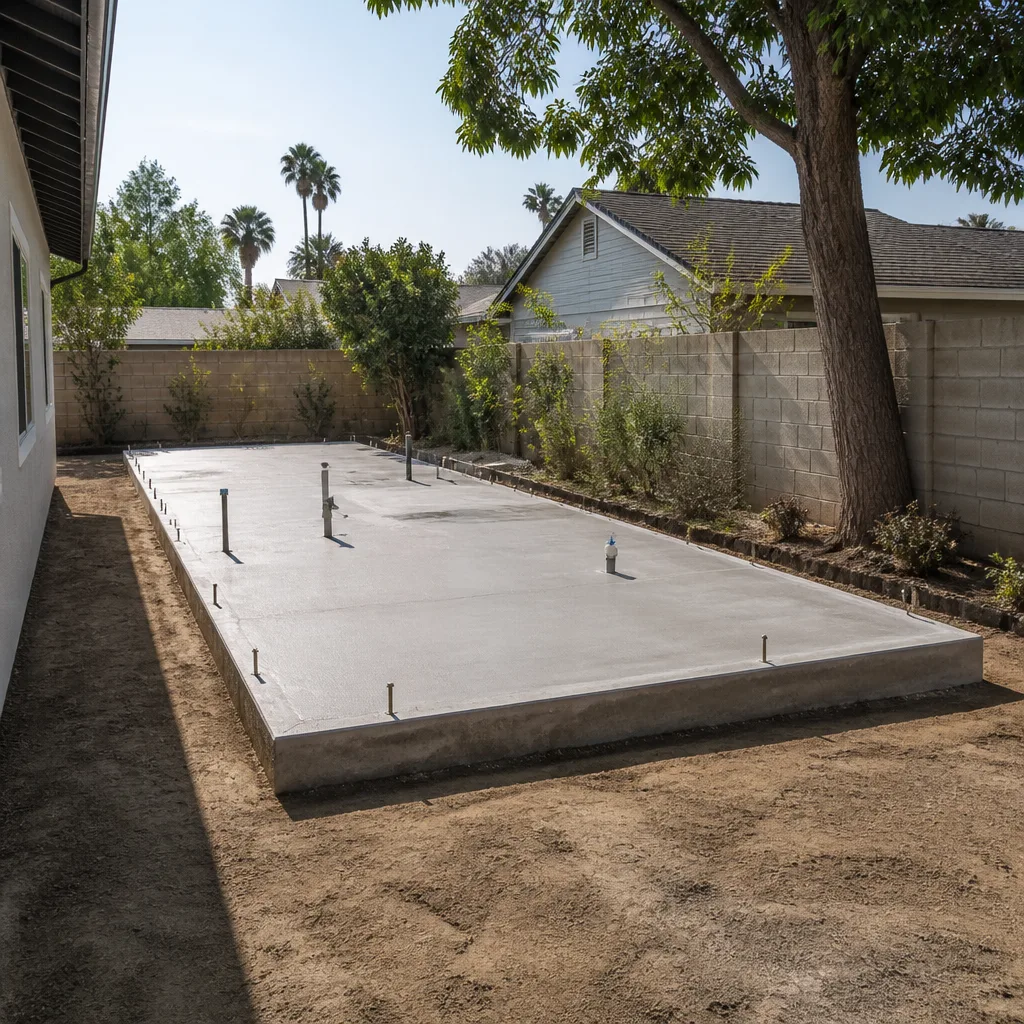
Every Tuff Shed rests on the same truth: the shed is only as level as what’s under it. That said, the prep specifics shift depending on which series you bought. The Premier PRO Series and Premier PRO Cabins, which Woodland Hills owners often order as backyard offices or gyms, have tighter floor framing and heavier base rails, so they’re less forgiving of a sloppy pad. A 1-inch slope across the floor reads as a door that doesn’t close right and a ridge line that looks off. The Classic and Sundance Series are lighter, but they’ll still telegraph a bad base within a season, especially on the clay-heavy soil we see near Warner Center and north of Ventura Boulevard.
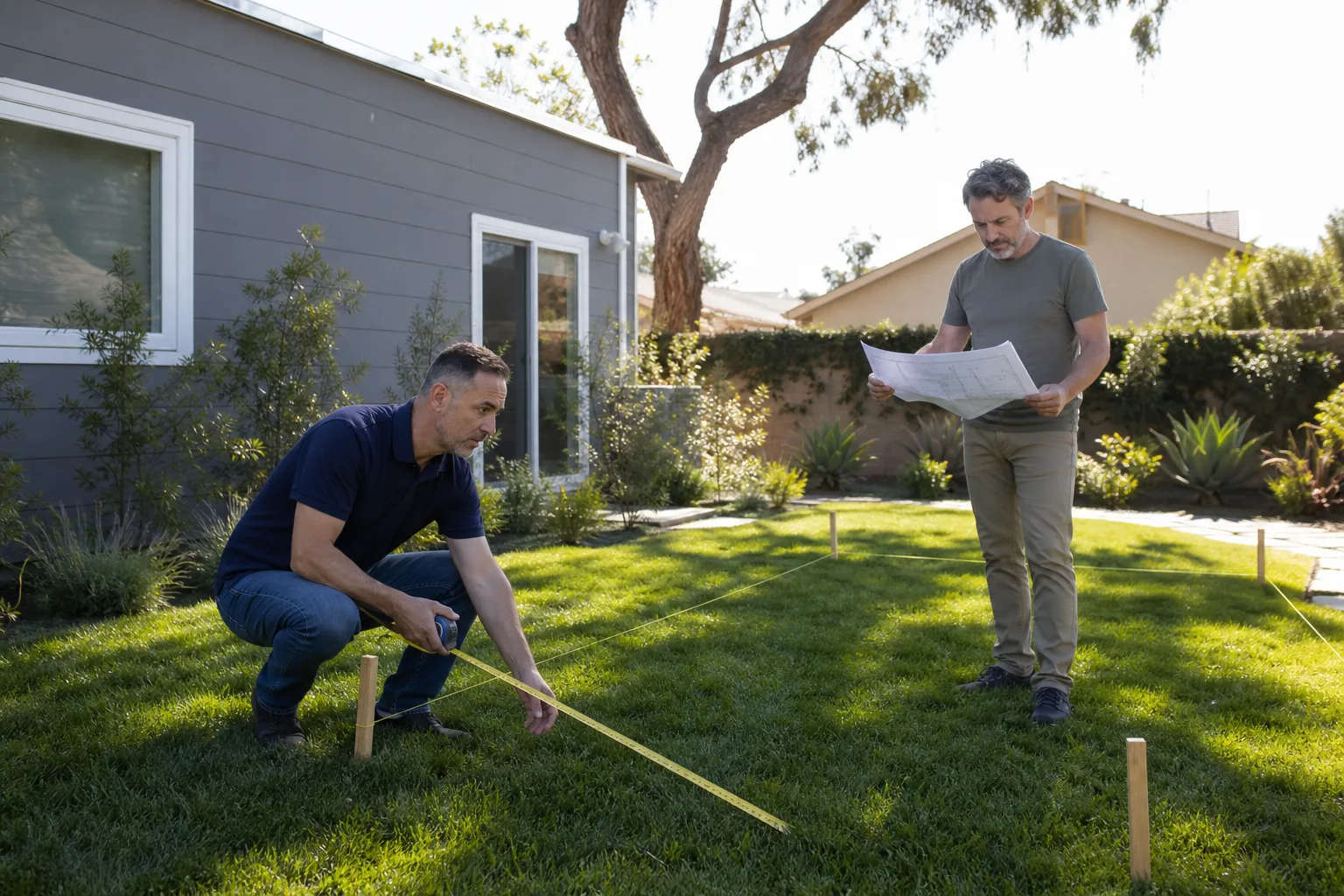
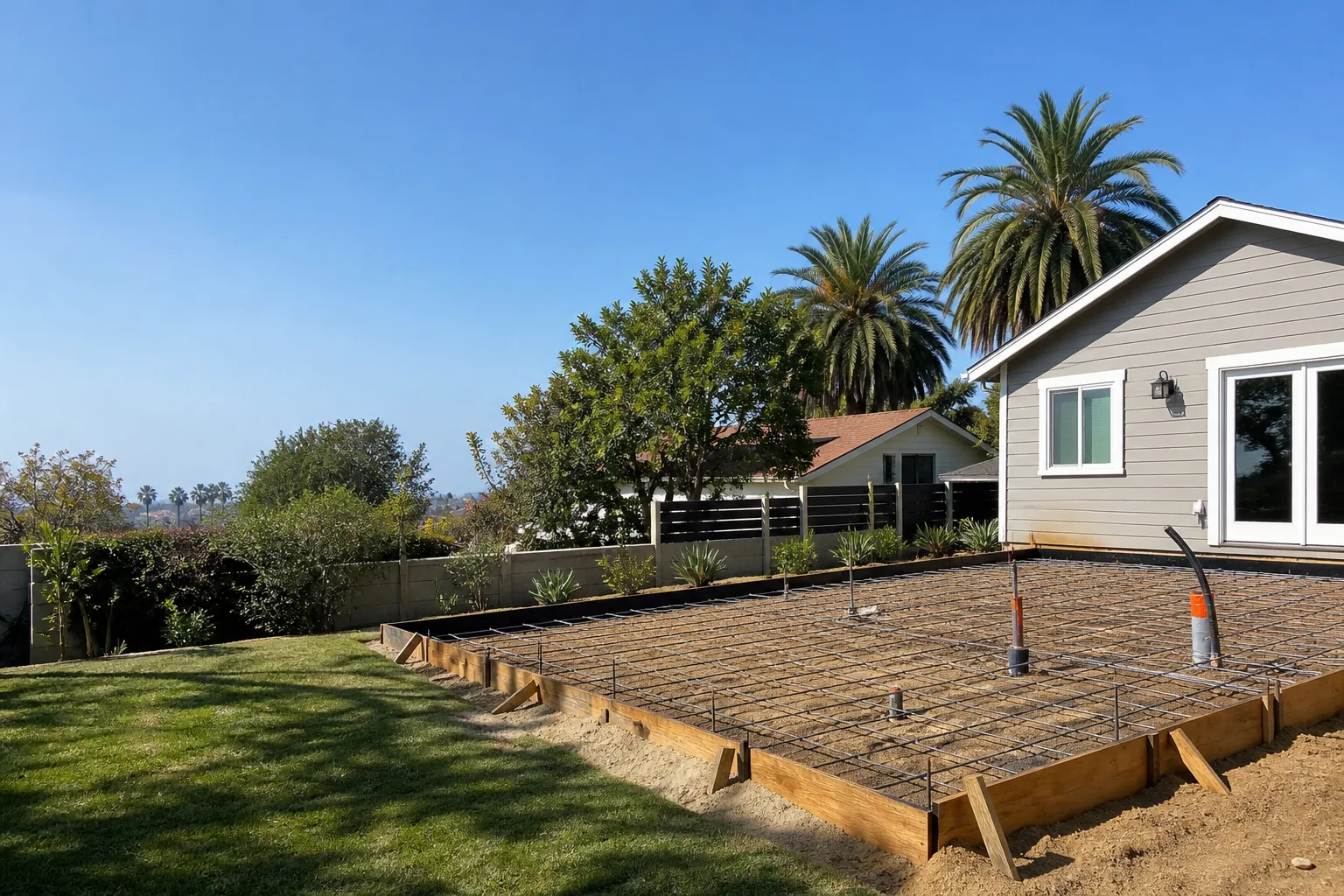
One compatibility gotcha we see repeatedly: owners assume the shed’s exterior dimensions are the pad’s dimensions. They’re not. You’re pouring or grading to the floor frame dimensions, plus a 4-to-6-inch perimeter margin for drainage and termite access. On a 10×12 Premier PRO, that’s the difference between a 120-square-foot pad and one that’s 14 feet on a side once you factor the overhang. Pull up your order confirmation and find the “floor size” spec, not the roof span. If you can’t find it, call us and read us the model number from the build sheet. We’ll tell you the exact base footprint.
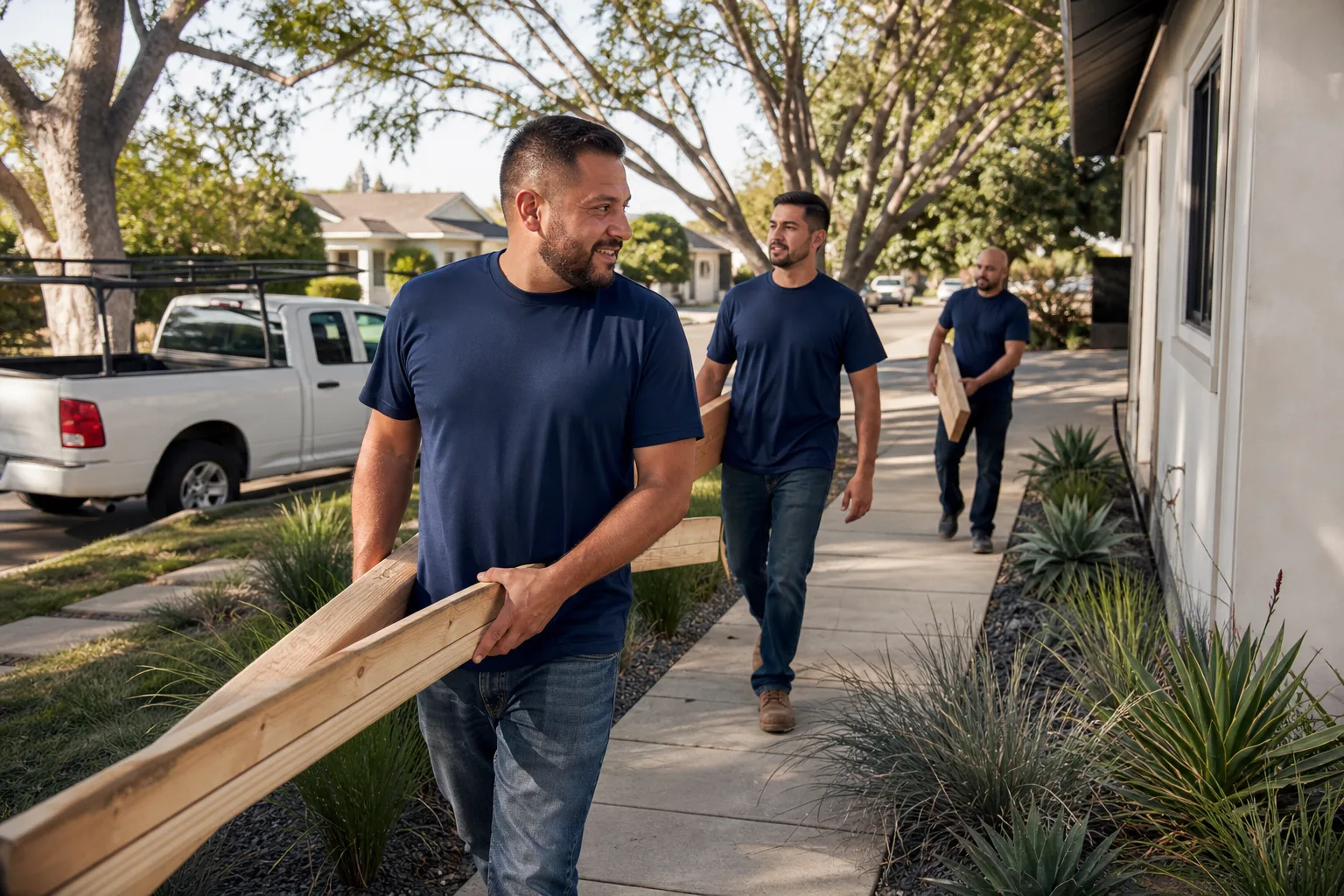
We stock and install site prep components that match Tuff Shed’s build sheets directly: treated bottom plates for sheds going on concrete, gravel base material to Tuff Shed’s current installation specs, and the conduit and panel sizing their electrical packages expect. We’re not affiliated with Tuff Shed, but we build with their sheds constantly enough to know their specs without guessing. We also work with other prefab brands, like Abodu, Cover, and Dvele, where site prep requirements are even more exacting, but a Tuff Shed still wants the fundamentals done properly.
Signs Your Tuff Shed Site Prep & Utilities Is Failing
- Doors that dragged fine for a year now stick or swing shut. The pad or ground under one corner has settled or heaved, and the floor framing is twisting to match. On Woodland Hills’ expansive clay, this usually shows up after the first wet winter following a dry-year installation.
- Water pools along one wall after rain. The pad wasn’t graded with positive drainage, or the perimeter gravel has silted in. Water against the bottom plate of any Tuff Shed invites mildew, rust on fasteners, and eventual floor framing rot, even on pressure-treated lumber.
- Power drops out when you run more than one tool. The original trench may not have been sized for future loads, or the wire gauge was spec’d too tight for the run distance. We see this on Woodland Hills lots where the panel is on the house opposite the shed, overhead wire was skipped, and the original installer didn’t account for voltage drop.
- The shed visibly leans or the ridge line sags. This is the loudest failure mode: the base under one lengthwise rail has settled more than the rest. A string line across the floor joists will confirm it in about four minutes.
- Gravel is migrating downslope or disappearing into bare dirt. On cans with slope, like many lots tucked behind Lanark Park, a gravel pad without a contained border will wander. The shed starts sitting on raw grade within a season, and that’s where the tilt begins.
Replacement Cost & What’s Included
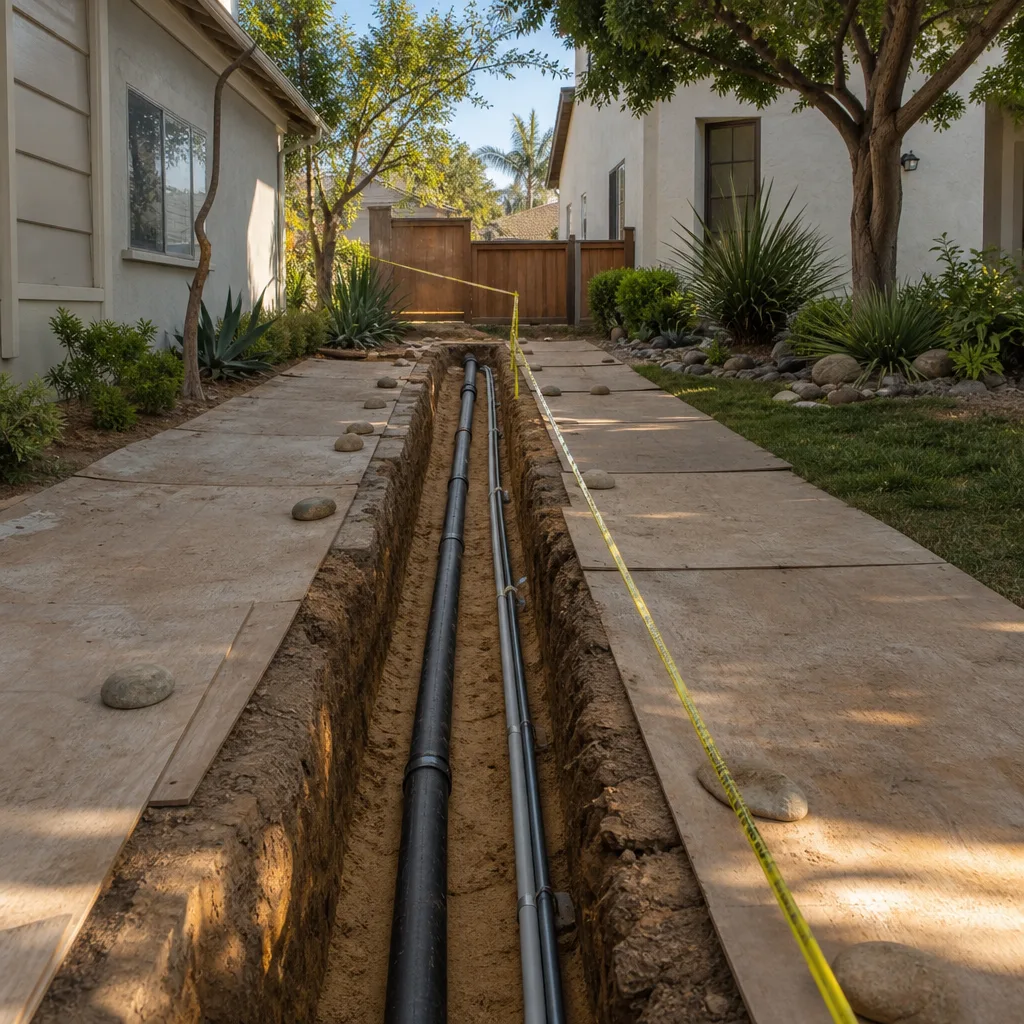
Here’s what a Tuff Shed site prep and utility package looks like in Woodland Hills right now. These are installed ranges, parts and labor together, not ballpark guesses.
| Scope | Typical Range in Woodland Hills |
|---|---|
| Gravel pad with compacted base and perimeter border (for sheds up to 10×12) | $900 – $1,600 |
| Concrete pad, 4-inch slab with rebar, formed and finished (up to 120 sq ft) | $1,400 – $2,400 |
| Trenching for electrical, including conduit, wire, and subpanel tie-in (50 ft run) | $700 – $1,500 |
| Water line stub-out with shutoff valve, trench and backfill (50 ft run) | $600 – $1,200 |
| Grading and minor regrade of a sloping site before pad install | $400 – $1,000 |
| Full site prep plus electrical and water rough-in | $2,500 – $5,800 |
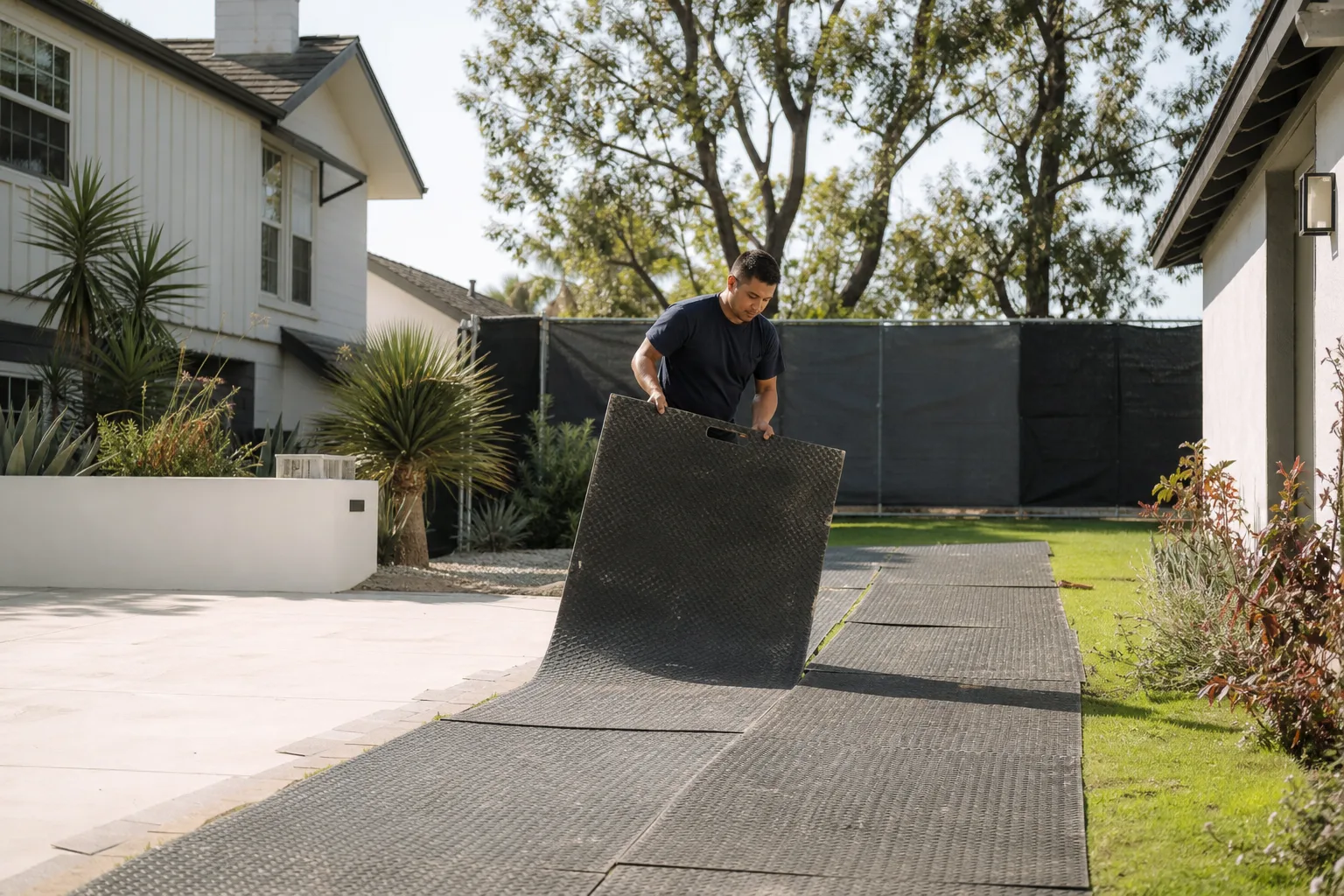
What drives the range: how far the trench runs from your main panel or water meter, whether the pad needs excavation or just a skim of topsoil, and whether you’re on the flat grids south of the Boulevard or the uneven lots near the hills. Every job gets a written line-item quote before work starts, and the labor carries our 365-Day Done Right Promise. If the pad settles or the trench drains wrong within a year, we’re back on it. No change orders, no “we didn’t see that coming” add-ons.
DIY or Call Us?
Site prep is the one part of Tuff Shed ownership where DIY genuinely works for some owners, if you’re building on flat ground with no utilities and you’ve got a weekend and a good back. Renting a plate compactor, laying road base in lifts, and getting a gravel pad within a half-inch of level across 10 feet is doable. The moment you add electrical, you’re past the DIY line. Running conduit and wire to a subpanel in Woodland Hills requires a permit, and underground feeder wire that’s under-spec’d for the run distance runs hot. That’s a fire that starts inside a wall cavity or conduit. We’re not going to give step-by-step instructions on anything involving a panel tie-in. Call DigAlert before any trench, and if you feel uncertain about the load math, call us at (559) 282-2291. We’ll tell you honestly whether the job is worth paying for or whether you can handle the pad yourself and we do the electrical. No pressure, just a straight answer.
FAQs
A properly compacted gravel or concrete pad on Clay-heavy Southern California soil should hold level for 15 to 25 years, with the caveat that the first 12 months are the proving ground. Expansive clay does most of its settling in the first wet-dry cycle after installation. If your pad stays true through one full winter, it’ll likely stay true for decades. Call (559) 282-2291 and we’ll take a look at your specific site grade before you commit to anything.
Half the time, yes. If the failure is localized settlement under one corner, we can often lift, add base, and re-level the floor framing without a full teardown. If the pad is cracked or the original gravel is gone, replacement is the honest call. We’ll tell you which one after a site visit, not before.
Most Tuff Shed site prep jobs in Woodland Hills take three to five working days, including inspection. Weather can stretch that an extra day or two in winter. We schedule the trench and pad work together so you’re not waiting on two crews. The written quote includes a start date and a completion window before you sign anything.
We keep the common materials on hand: road base, gravel, treated bottom plates, conduit, standard panel components, and the rebar and forms for slabs up to 120 square feet. Anything custom, like a long trench run over 100 feet, gets ordered with a lead time you’ll see on the quote line item. No mystery delays, no “waiting on materials” phone tag. If a material delay does happen, you’ll know the day we know.
Written by Troy Eastman, Owner & Lead Builder, Benson ADU Woodland Hills at Benson ADU Woodland Hills, serving Woodland Hills and nearby areas.
If your Tuff Shed is still sitting on bare dirt or you’ve been putting off the power run, call us at (559) 282-2291. We’ll schedule a free site visit, walk the pad location with you, and put a written price in your hands before any work begins. A well-built ADU should feel like it was always supposed to be there. Same goes for the shed behind it.