Dvele Site Prep & Utilities: The Woodland Hills Owner’s Guide
Site prep and utility installation for a Dvele home in Woodland Hills typically runs $18,000 to $55,000 depending on your lot’s slope, soil conditions, and how far your utility connections sit from the street. We stock the most common Dvele-compatible foundation, trenching, and utility components, and our crews can typically begin a standard site prep scope within two to three weeks of permit approval. Most Woodland Hills owners discover site prep problems either when their Dvele delivery window approaches and the pad isn’t ready, or when a trench, drain, or utility stub fails inspection the first time around. The fix usually isn’t one part. It’s a package of corrections: regrading, compaction fixes, trench repair, or re-stubbing a utility line that got installed wrong or settled out of spec.
We are an independent service provider, not affiliated with Dvele. That matters because we can source equivalent components without being locked into a single supplier’s timeline or pricing. If a spec calls for a specific utility vault, a particular trench width, or a compaction rating, we match it exactly, and we document it so your Dvele delivery never gets delayed at the final walkthrough.
Which Dvele Models This Applies To
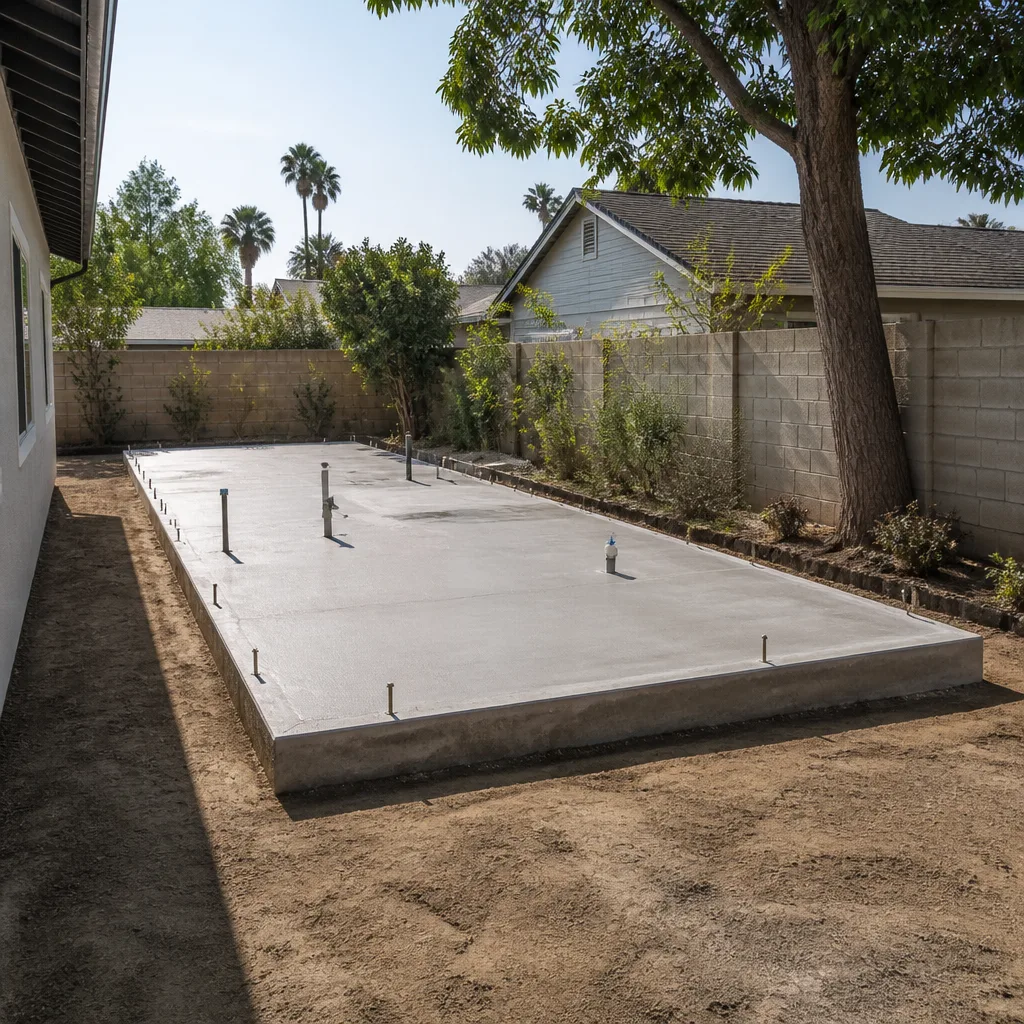
Dvele builds its homes as a complete panelized system, which means site prep has to be more precise than standard site-built construction. The foundation or pier system sits underneath a factory-built shell that arrives in sections, so tolerances are tighter. For Woodland Hills lots, the common Dvele configurations are single-story and two-story models on either a slab-on-grade foundation or a raised pier-and-beam system, depending on the soil report.
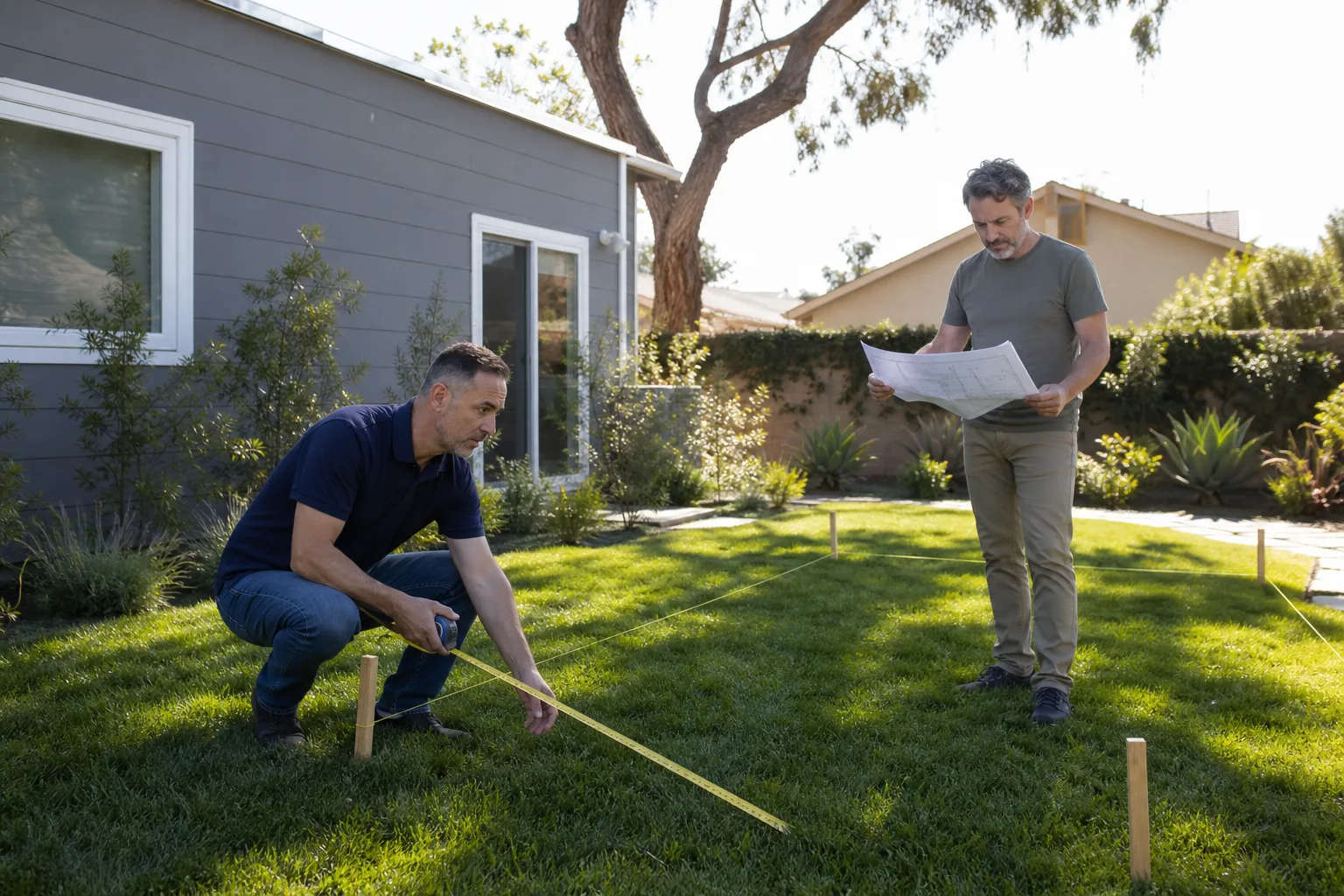
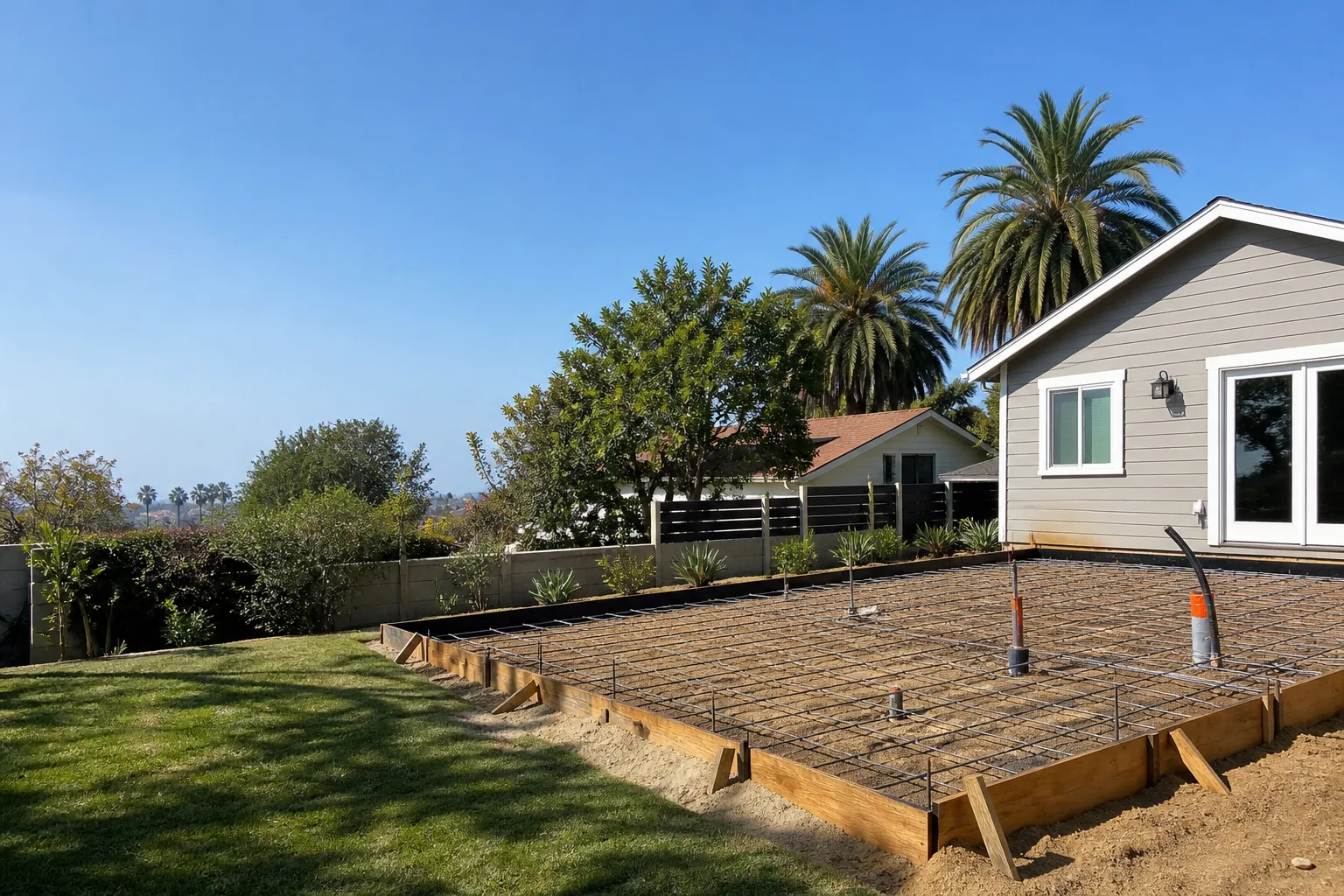
The site prep scope typically includes the building pad, utility trenches for water, sewer, and electrical, any required retaining work, and the stub-outs that connect to the street. The gotcha most owners don’t see coming is that Dvele specs normally require a flatness tolerance of plus or minus 1/4 inch across the entire pad area. A standard site-built foundation might pass with far looser tolerances. If your pad is off by half an inch, the factory panels won’t seat correctly, and the delivery crew will not unload. We check pad flatness with a laser level before any Dvele delivery window gets locked in. That single check has saved Woodland Hills owners thousands in re-delivery fees.
When it comes to decisions, OEM versus aftermarket matters most on things like the water main stub, electrical conduit, and sewer lateral. We match the spec sheet exactly and use materials that meet or exceed what the original engineering reviewed. If a Dvele-approved supplier has a four-week lead time on a utility vault and an equivalent is sitting in a local yard, we’ll show you the spec comparison in writing and let you choose.
Signs Your Dvele Site Prep & Utilities Is Failing
- Standing water near the pad or in utility trenches weeks after rain. Woodland Hills gets concentrated winter rain, and if your pad drains toward the foundation or your trenches hold water, the base under the slab is losing integrity. We see this on lots near the foothills where the clay content is higher and drainage wasn’t sloped correctly at first install.
- Visible cracking in the slab or pad edges before the home is even set. This usually means the soil underneath wasn’t compacted to spec, or the concrete was poured too thin at the edges. Either way, the Dvele delivery crew will flag it before unloading.
- Utility stubs that don’t line up with the Dvele connection points. If the sewer lateral is off by eight inches or the electrical conduit comes up in the wrong place, the panelized system won’t connect cleanly. This is a measurement error or a change order that wasn’t reflected in the site work.
- Failed inspection notices on trench depth or slope. In Woodland Hills, sewer laterals need the correct fall, usually 1/4 inch per foot or 2 percent, depending on your line and the inspector’s reading. If a trench got backfilled before the inspection, the inspector will often require a re-excavation. That’s a common and expensive correction we fix routinely.
- The pad is visibly out of level, even by a fraction of an inch. You may not notice it by eye, but a four-foot level will. The Dvele delivery crew absolutely will. We run a laser check as part of every pre-delivery inspection we do.
Replacement Cost & What’s Included
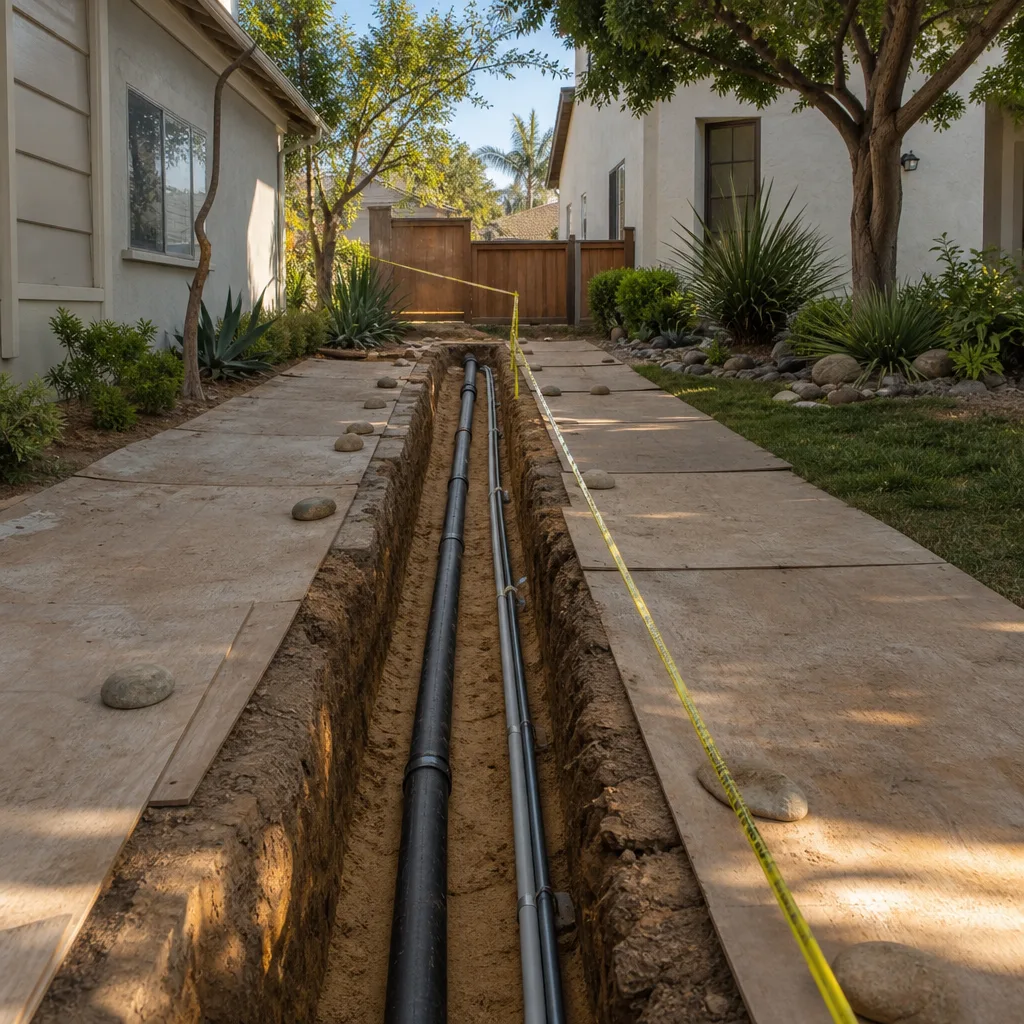
For a typical Woodland Hills Dvele site prep correction, plan on these ranges:
- Pad regrading and re-compaction: $4,500 to $12,000 depending on square footage and how much material has to move.
- Sewer lateral repair or re-stub: $2,800 to $7,500 depending on depth, length, and whether the street connection is involved.
- Water main trench and re-stub: $1,800 to $4,200 for typical residential lots.
- Electrical conduit correction: $1,500 to $3,500 when the line is in the wrong position or buried at the wrong depth.
- Site drainage and swale repair: $2,000 to $6,000 if the lot needs regrading to move water away from the pad.
The range depends on what a site inspection uncovers: soil type, access for equipment, how deep the utility lines sit, and whether the original work was simply wrong or has degraded over time. Every quote is a written line-item price before any work begins. You’ll see parts and labor separated, and the quote won’t change unless the scope genuinely changes and you approve it in writing first. All work carries our 365-Day Done Right Promise. If something isn’t right within a full year, we make it right at no charge.
DIY or Call Us?
Utility work is one place where a homeowner should not reach for a shovel. Trenching anywhere near a live gas line, buried electrical conduit, or a pressurized water main is dangerous. In Woodland Hills, many utility lines are shallower than state guidelines suggest, especially in older neighborhoods where the original trenching was done generations ago. Hand digging a flower bed is one thing. Excavating to repair or re-stub a Dvele utility connection requires a utility locate, the right compaction equipment, and knowledge of local inspection requirements. Get it wrong and you’re re-doing it in front of an inspector who now has a note in the file about the address.
What you can safely do: document what you see. Take photos of standing water, crack patterns, and the positions of existing utility stubs. Flag anything that looks off. Then call (559) 282-2291. We’ll send a trained crew to evaluate the site and give you a written scope before a single shovel turns.
FAQs
A properly compacted pad with correct drainage should last the life of the home, but in Woodland Hills, the main lifespan risk is water movement through expansive clay soils during winter rains. We typically see failed pads and utility settling on lots where the original prep skipped a proper compaction test or drainage plan. Done right, you shouldn’t have to touch it again.
Most site prep failures can be repaired without removing the entire pad. Regrading, re-compaction, and re-stubbing a utility line in the correct position are standard corrections. Full replacement is rare and usually only needed when the concrete itself is structurally unsound. We’ll tell you honestly which one you’re facing, and the written quote will reflect exactly the scope that’s needed.
Most corrections run three to ten days from start to inspection-ready, depending on how many trades are involved and whether the city or county needs to inspect at multiple stages. Utility corrections that involve the street connection can add a day or two for coordination with the local utility provider.
We keep common plumbing stubs, electrical conduit, compaction materials, and drainage components stocked and ready. For anything with a longer lead time, we show you the schedule in writing. Troy Eastman will walk you through exactly what’s on the truck, what’s coming from a supplier, and how that affects your Dvele delivery window.
Call (559) 282-2291 for a free, written estimate. A live person answers, and we’ll schedule a site visit at a time that works for you.
Written by Troy Eastman, Owner & Lead Builder, Benson ADU Woodland Hills at Benson ADU Woodland Hills, serving Woodland Hills and nearby areas.